The framework (what I bring)
- A structure for shared governance
- Role paths for each role
- Facilitated team sessions
- Starter templates
- The measurement model (baseline → follow-up, five KPIs)
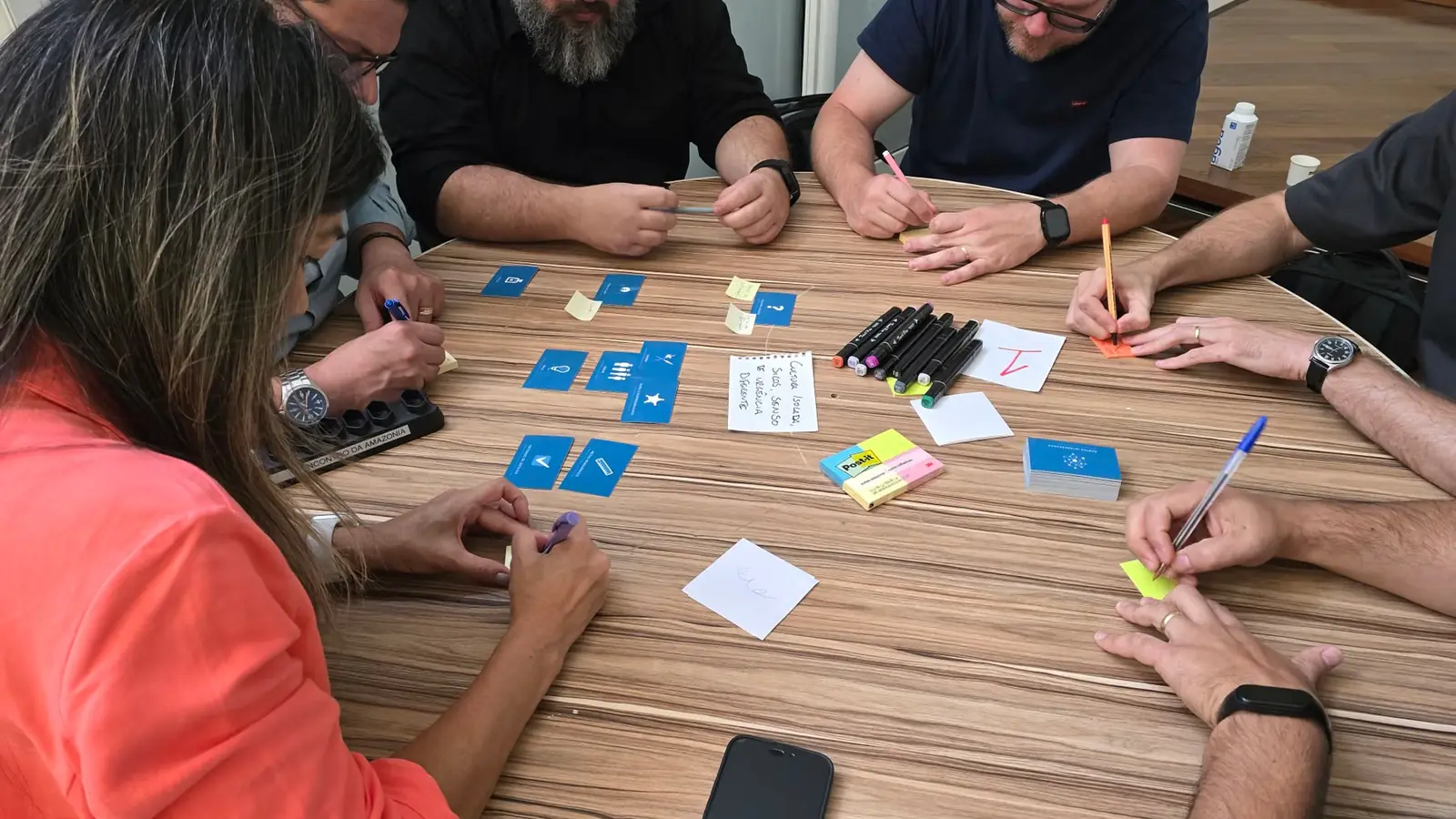
A toolkit for every hand in the team.
These aren’t documents you buy. Your teams build them, around their own roles, paths and AI tools. The Many Hands framework gives them the structure: how to work together, how each person gets the most from AI as their role changes, and how to measure that outcomes improve.
The framework stays the same across the company. Each team’s toolkit is its own.
Same framework everywhere. Each team’s toolkit is its own.
Read the diagram as a list
Governance isn’t a separate team checking from the outside. It’s the people doing the work, acting as they agreed they would.
 Agree In the team session, each role agrees what it checks, when it steps in and who it hands to.
 Act When an AI output is wrong or a case doesn’t fit, people react the way they agreed: pause, override, escalate, fix.
 Recognise Teams see the benefit: fewer errors, faster fixes, less blame. And they update their toolkit with what they learned.
The agreement improves every time
Example: Sabine, the caseworker, sees a wrong AI answer. She overrides it and records why, exactly as her team agreed. The team reviews the log, sees the same issue three times, and changes the rule.
People follow rules they wrote themselves.
Guidelines your teams write and share, the same core for everyone.
Each role shapes its path from its own work.
Built from the team’s real cases. They diagnose, not grade.
Who checks, decides, escalates and fixes. See an example →
The questions your team asks before an AI change ships.
Where people stepped in, and where guidance was unclear.
Copilots, agents and assistants aren’t separate from this. Each team decides how its AI tools fit each role: what the agent does, what people check, what people own. That decision goes into the toolkit too.
Confidence and capability as their role changes.
Clear owners, fewer gaps between roles.
Fewer errors, and a person to reach when something goes wrong.
| Microsoft HAX (external site) | Google People + AI Guidebook (external site) | Many Hands Toolkit | |
|---|---|---|---|
| Focus | How an AI product should behave towards people | Designing human-centred AI products | A framework teams use to build their own toolkit, around their roles, paths and AI tools, governed by the people who do the work. |
| Format | 18 guidelines, patterns, workbook, playbook | 23 patterns, 6 chapters with worksheets, case studies, workshop kit | Core library, role paths, team agreement, review checklist |
| Who it’s for | Product teams | UX and product teams | Every role, including frontline staff |
| What it covers | The product’s behaviour with people | Human-centred product design | Review, ownership and correction across the team |
| What it adds | — | — | Ownership, rehearsal and the right to stop |
HAX and PAIR help teams design better AI products. The Many Hands Toolkit helps the whole team use that guidance together, with clear owners for every step.